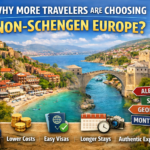

Europe is changing the rules of entry—and the ripple effects are global. For decades, visas acted like guarded gates, separating those who could explore Europe freely from those stuck behind paperwork and long waits. Today, that gate is opening wider. New visa-free policies, evolving agreements, and smarter border systems are reshaping how people from more countries can enter Europe with fewer hurdles.
This shift brings excitement, opportunity, and also a fair share of uncertainty. For travelers, it promises freedom and speed. Governments, it raises questions about security, migration, and balance. For Europe itself, it signals a new chapter in mobility.
Let’s break it all down clearly, honestly, and practically.
Why Europe Is Expanding Visa-Free Access
Visa policy is never random. It reflects politics, economics, security, and diplomacy. Europe’s recent moves toward visa-free access are driven by several strong forces working together.
First, tourism matters. Europe’s travel sector took a hit in recent years. Making entry easier helps revive airlines, hotels, and local economies. A traveler who doesn’t need a visa is more likely to book quickly.
Second, diplomacy plays a role. Visa-free travel is often a reward for cooperation. Countries that improve passport security, border controls, and migration management gain trust. Trust leads to access.
Third, competition is real. Regions like Southeast Asia and parts of Latin America already offer relaxed entry rules. Europe doesn’t want to lose global travelers to easier destinations.
Finally, technology has changed the game. Digital screening systems allow Europe to check travelers before they arrive. That reduces risk without slowing movement.
These pressures combined are pushing Europe toward smarter openness, not blind access.

Understanding Europe’s Visa-Free Framework
Before diving into new policies, it helps to understand how Europe manages entry.
Most visa-free travel to Europe operates through the . This zone includes over 25 European countries that share a common external border. Once you enter one, you can move freely among the others.
Visa-free access usually allows:
- Short stays only
- Tourism, business meetings, or family visits
- No paid work
- A maximum of 90 days within 180 days
This rule applies regardless of how many Schengen countries you visit.
Europe’s policies are coordinated at the continental level, mainly by the , even though not all EU countries are in Schengen.
Countries Benefiting From New or Expanded Visa-Free Access
In recent years, Europe has reviewed visa rules for dozens of countries. Some gained full visa-free access. Others saw relaxed conditions or fast-tracked negotiations.
Countries often considered for visa liberalization share these traits:
- Low overstay rates
- Strong passport security
- Cooperation on migrant returns
- Stable political systems
Regions seeing the most movement include:
- Parts of Africa
- The Middle East
- The Caribbean
- Eastern Europe
These changes don’t happen overnight. They follow years of technical reviews and political debate.
For an official overview of how visa-free travel works in Europe, the European Commission’s Schengen guide explains eligibility and rules clearly, without hype or confusion
The Role of ETIAS: Visa-Free, Not Check-Free
Many travelers hear “visa-free” and assume zero checks. That assumption is outdated.
Europe is introducing the , commonly called ETIAS. It applies to travelers who already enjoy visa-free entry.
ETIAS is:
- An online pre-travel authorization
- Required before boarding
- Valid for multiple trips
- Usually approved within minutes
It is not a visa. Think of it as a security filter, similar to systems used in the United States and Canada.
ETIAS exists because Europe wants openness without losing oversight. Travelers get convenience. Authorities get advance data.
The official ETIAS explanation from the European Union outlines who needs it, how it works, and what it cost
Visa-Free vs Visa on Arrival: Know the Difference
These terms are often confused, but they are not the same.
Visa-free travel means:
- No visa application at all
- Entry allowed with passport only
- Authorization may still be required online
Visa on arrival means:
- No embassy visit beforehand
- Visa issued at the border
- Fees and checks on arrival
Europe mostly favors visa-free entry, not visa on arrival. That reduces border congestion and uncertainty.
For travelers, visa-free access is far better. There’s no waiting line. No cash payment at the airport. No stress after landing.
Positive Impacts for Travelers Worldwide
The benefits of Europe’s visa-free expansion are hard to ignore.
Travelers gain:
- Faster trip planning
- Lower costs
- More spontaneous travel
- Reduced rejection anxiety
Students attending conferences benefit. Entrepreneurs attending meetings benefit. Families reconnect more easily.
Visa-free access also improves dignity. For many travelers, visas felt like suspicion by default. Easier entry feels like recognition and trust.
For young travelers especially, it opens cultural doors. Europe becomes less distant and more reachable.
Economic Gains for Europe
Europe doesn’t open borders purely out of kindness. There is a clear economic logic.
Visa-free travelers tend to:
- Travel more often
- Spend more per trip
- Visit multiple countries
- Recommend destinations to others
Tourism supports millions of European jobs. From taxi drivers to tour guides, smoother entry feeds livelihoods.
Business travel also grows. Short visits lead to partnerships, investments, and long-term cooperation.
In short, easier entry equals stronger economic circulation.
Security Concerns and Public Anxiety
Despite the positives, not everyone celebrates these policies.
Critics worry about:
- Illegal overstays
- Asylum abuse
- Security threats
- Pressure on social services
These fears drive political resistance in some European countries. Governments must justify openness to voters who want control.
That is why Europe pairs visa-free access with:
- Biometric passports
- Pre-travel screening
- Information sharing between states
Openness today is conditional, monitored, and reversible.
A Snapshot of Recent Visa-Free Developments
Here is a simplified overview of how Europe categorizes access today.
| Category | What It Means | Examples |
|---|---|---|
| Long-standing visa-free | Full access for years | Japan, South Korea |
| Recently liberalized | New visa-free status | Select Caribbean states |
| Under negotiation | Possible future access | Some African nations |
| Restricted | Visa still required | High-risk countries |
Policies evolve yearly. Always confirm before travel.
Who Benefits the Most From These Changes?
Visa-free expansion helps some groups more than others.
Major beneficiaries include:
- Frequent travelers
- Business owners
- Students attending short programs
- Tourists planning multi-country trips
Those least helped are people seeking work or long-term residence. Visa-free rules do not replace work permits or study visas.
Understanding this boundary avoids disappointment.
The African Perspective: Hope Mixed With Caution
For many African travelers, Europe’s changing policies spark optimism.
Visa hurdles have historically limited mobility. Even well-qualified travelers faced rejection. Visa-free access feels like long-overdue fairness.
However, expectations must be realistic. Not all African countries are included. Progress is uneven.
Europe evaluates countries individually, not by region. Political stability, migration patterns, and documentation standards matter.
Progress is real, but patience remains necessary.
How to Prepare for Visa-Free Travel to Europe
Even without a visa, preparation matters.
Travelers should:
- Check passport validity
- Confirm allowed stay length
- Apply for ETIAS when required
- Carry proof of funds
- Have return tickets
Border officers can still refuse entry. Visa-free does not mean guaranteed admission.
Prepared travelers rarely face issues.
Common Mistakes That Ruin Visa-Free Trips
Many travelers sabotage themselves unintentionally.
Avoid these errors:
- Overstaying the 90-day limit
- Working illegally
- Entering without required authorization
- Lacking accommodation details
One mistake can lead to future bans. Visa-free privilege depends on compliance.
Will More Countries Gain Access Soon?
Trends suggest yes—but slowly.
Europe is cautious. Each new addition requires consensus and monitoring.
Countries improving governance, border control, and migration cooperation are more likely to succeed.
Technology will accelerate this process. Digital tracking reduces uncertainty.
The direction is forward, not backward.
What This Means for the Future of Global Mobility
Europe’s evolving visa-free policies signal a larger shift.
Borders are no longer just physical. They are digital, predictive, and layered.
Travel is becoming:
- Easier for trusted travelers
- Harder for high-risk cases
- Faster but more monitored
This balance defines modern mobility.
Final Thoughts: Opportunity With Responsibility
Europe’s new visa-free policies are opening doors that were once firmly shut. For millions, that door represents freedom, dignity, and connection. For Europe, it represents growth and influence.
But freedom comes with responsibility. Travelers must respect rules. Governments must manage fears honestly. Systems must remain fair.
If handled well, this new era of mobility benefits everyone.
The gate is opening. How we walk through it matters.