
Germany is not just Europe’s industrial engine. It is also one of the biggest logistics and manufacturing hubs in the world. Behind every busy warehouse, factory, and distribution center, there is one role that keeps goods moving. That role is the forklift operator.
If you are looking for a practical, well-paid, and in-demand job in Germany, forklift operator work deserves serious attention. Many of these jobs pay between €35,000 and €55,000 per year, depending on experience, location, and shift patterns.
More importantly, Germany is facing a severe labor shortage in logistics and industrial roles. This has made skilled and semi-skilled workers more valuable than ever.
According to salary data from StepStone, forklift drivers in Germany earn an average salary in this range depending on experience and region, with higher pay in industrial states and large cities such as Bavaria and North Rhine-Westphalia. You can see current salary benchmarks on StepStone’s forklift driver salary guide here
At the same time, Germany’s Federal Employment Agency confirms that logistics and warehouse roles remain on the shortage occupation list, especially in manufacturing and distribution sectors. You can verify this trend through Germany’s official job market portal here
This combination of strong demand, decent pay, and low entry barriers makes forklift operator jobs one of the most realistic pathways into the German labor market for foreigners.
Why Forklift Operator Jobs Are in High Demand in Germany
Germany’s economy runs on factories, exports, and logistics. Every day, millions of goods move through:
- Warehouses
- Ports
- Airports
- Factories
- Distribution centers
- Supermarkets and retail supply chains
All of these places depend on forklift operators to:
- Load and unload goods
- Move heavy pallets
- Organize warehouse storage
- Support production lines
The demand is high for three main reasons:
- Germany has an aging workforce
- Fewer young Germans choose physical logistics jobs
- E-commerce and manufacturing continue to grow
As a result, companies are now more open to:
- Hiring foreign workers
- Offering training and certification
- Sponsoring work visas in some cases
This is why forklift operator jobs are no longer “small jobs.” They are now strategic roles in Germany’s supply chain.
How Much Do Forklift Operators Earn in Germany?
Forklift operator salaries in Germany are stable, predictable, and often increase with experience.
Here is a clear breakdown:
| Experience Level | Annual Salary (Gross) | Monthly Estimate |
|---|---|---|
| Entry Level | €30,000 – €35,000 | €2,500 – €2,900 |
| Mid-Level | €35,000 – €45,000 | €2,900 – €3,750 |
| Experienced | €45,000 – €55,000+ | €3,750 – €4,600 |
Salaries increase when:
- You work night shifts
- You work in large factories
- You work in ports or industrial hubs
- You have several years of experience
- You can operate multiple types of forklifts
Some companies also offer:
- Overtime pay
- Shift bonuses
- Holiday pay
- Performance bonuses
What Does a Forklift Operator Actually Do?
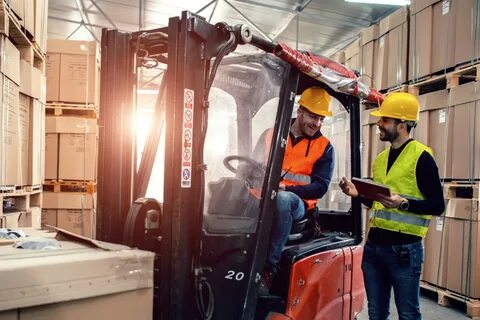
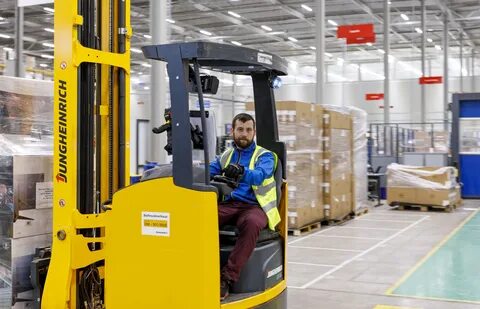
A forklift operator is not just “driving a machine.” The job is about precision, safety, and speed.
Typical duties include:
- Loading and unloading trucks
- Moving pallets inside warehouses
- Stacking goods on high shelves
- Supplying production lines
- Checking goods for damage
- Following strict safety rules
In many German factories, forklift operators are essential to daily production. If they stop, the factory stops.
That is why good operators are respected and kept for many years.
 What Skills Do You Need for This Job?
You do not need a university degree. But you do need practical skills and discipline.
Most employers look for:
- Ability to operate a forklift safely
- Good hand-eye coordination
- Basic understanding of warehouse processes
- Physical fitness
- Reliability and punctuality
- Willingness to work shifts
You will also need a forklift license (Staplerschein) in Germany. Many employers:
- Provide training
- Or help you get certified after hiring
Do You Need German Language Skills?
For many forklift jobs, basic German is enough.
Usually, you need:
- Simple German for safety instructions
- Understanding signs and labels
- Basic communication with supervisors
You do not need fluent German for most warehouse roles.
However:
- Better German = better job options
- Better German = higher pay chances
- Better German = promotion opportunities
Where Forklift Operators Work in Germany
You can find forklift jobs in almost every industrial sector:
- Logistics companies
- Amazon-style fulfillment centers
- Car factories
- Food processing plants
- Chemical factories
- Construction material warehouses
- Ports and cargo terminals
The biggest hiring regions include:
- North Rhine-Westphalia
- Bavaria
- Baden-Württemberg
- Hamburg
- Saxony
Forklift Operator vs Warehouse Worker: What’s the Difference?
Many people confuse these roles. Here is a simple comparison:
| Role | Main Task | Pay Level |
|---|---|---|
| Warehouse Worker | Packing, sorting, loading | €28,000–€38,000 |
| Forklift Operator | Machine operation, pallet movement | €35,000–€55,000 |
Forklift operators usually:
- Earn more
- Have more responsibility
- Are harder to replace
- Get better shift bonuses
Is This a Good Job for Foreigners?
Yes. Very much.
Forklift operator jobs are:
- Skill-based, not degree-based
- In shortage supply
- Available across Germany
- Easier to enter than office jobs
Many foreigners start in logistics and later move to:
- Supervisor roles
- Team leader roles
- Warehouse management roles
The Good and the Hard Parts of the Job
The Good
- Stable demand
- Decent pay
- Easy entry compared to office jobs
- Overtime opportunities
- Clear career path
The Hard
- Physical work
- Shift work
- Standing for long hours
- Repetitive tasks
- Strict safety rules
Still, for many workers, this job is a smart trade-off between effort and income.
Conclusion
Forklift operator jobs in Germany are no longer low-value jobs. They are now:
- In demand
- Well paid
- Open to foreigners
- Critical to Germany’s economy
With salaries between €35,000 and €55,000 per year, this role offers a realistic, stable, and scalable career path in Europe’s strongest economy.