


Introduction: Why New Zealand Is on Everyone’s Migration List
There are many countries people dream of moving to.
But New Zealand is different.
It is not only beautiful, peaceful, stable, and well-governed. It has strong worker protection laws, clean environment. And most importantly, it has a serious shortage of workers across many industries.
From construction and healthcare to farming, logistics, and hospitality, New Zealand employers are actively searching for foreign workers. In many sectors, there are simply not enough local people to fill available roles.
This is why New Zealand continues to open its doors to skilled and semi-skilled migrants.
However, there is a reality many people discover too late:
You cannot just travel to New Zealand and start working.
You need the correct work visa, issued under New Zealand’s immigration system.
This guide explains, in simple and practical terms:
- What a New Zealand work visa is
- The main visa types in 2026
- How visa sponsorship works
- Which jobs are in demand
- Who can apply and who cannot
- The documents you need
- The real costs and timelines
- The mistakes that destroy applications
- How a work visa can lead to residence
If you are serious about working in New Zealand, this guide will save you time, money, and costly errors.
What Is a New Zealand Work Visa?
A New Zealand work visa is a legal permit that allows a foreign national to:
- Enter New Zealand
- Stay for a defined period
- Work in a specific job or for a specific employer
Without a work visa:
- You cannot work legally
- You cannot receive legal wages
- You risk deportation and future bans
A work visa is not just a travel document.
It is your legal right to earn a living in New Zealand.
Each work visa has conditions. Some tie you to one employer. Some restrict the type of work you can do. Others allow more flexibility.
The Two Official Sources You Should Always Trust
Immigration rules change frequently. Many blogs and agents publish outdated or misleading information.
The two most reliable and authoritative sources are:
- Immigration New Zealand, the official government immigration authority, which explains all visa rules and processes
- The official page for the Accredited Employer Work Visa (AEWV), which is now New Zealand’s main work visa system
In this guide, references to rules and processes are based on these official sources.
Why New Zealand Depends on Foreign Workers
New Zealand has a small population and a growing economy.
This creates long-term labour shortages in key sectors, including:
- Construction and infrastructure
- Healthcare and aged care
- Agriculture and food processing
- Transport and logistics
- Manufacturing
- Hospitality and tourism
- Engineering and technical trades
Even during economic slowdowns, these shortages do not disappear.
For this reason, New Zealand’s immigration policy is not anti-migration. It is skills-focused and demand-driven.
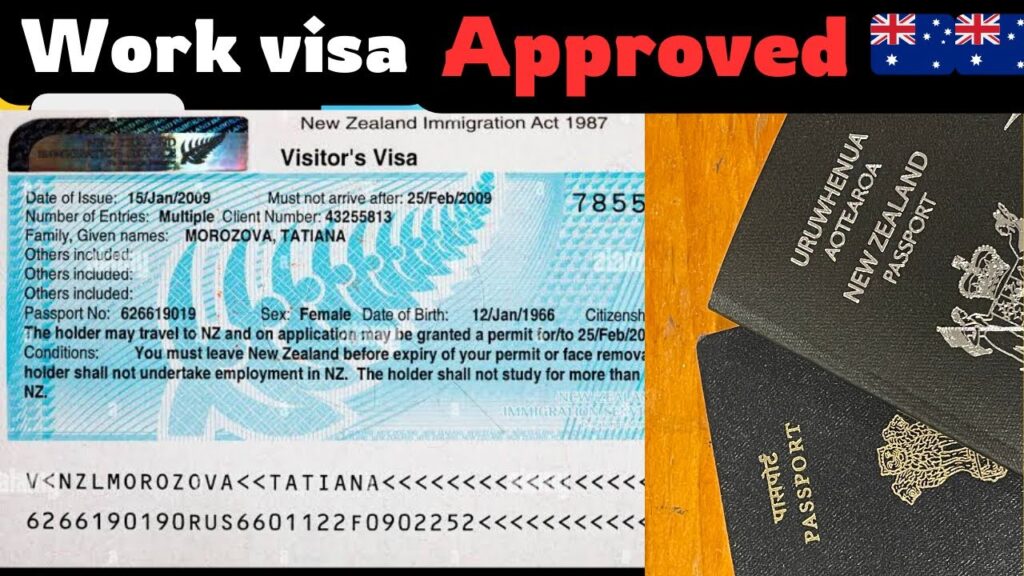 Main Types of New Zealand Work Visas in 2026
There are several work visa categories, but most foreigners come through these:
- Accredited Employer Work Visa (AEWV)
- Post-study work visa
- Working holiday visa (for certain countries only)
- Specific purpose or event visa
- Sector-based or transitional work visas
For people outside New Zealand looking for jobs, the Accredited Employer Work Visa (AEWV) is by far the most important.
The Accredited Employer Work Visa (AEWV) Explained in Plain English
The AEWV is the core work visa system in New Zealand.
It works like this:
- The employer must be approved and accredited by Immigration New Zealand.
- The job itself must be approved.
- You, the worker, then apply for the visa using that job offer.
This system was created to:
- Reduce exploitation
- Eliminate fake job offers
- Ensure migrants are hired into genuine roles
- Protect both workers and employers
You can read the official explanation directly on the Immigration New Zealand work visa system, which outlines who can work, under what conditions, and for how long.
Work Visa vs Visitor Visa: A Dangerous Confusion
Many people make a serious mistake here.
| Feature | Visitor Visa | Work Visa |
|---|---|---|
| Can you work? | No | Yes |
| Can you be paid? | No | Yes |
| Legal employment | No | Yes |
| Risk of deportation | Very high | None |
Working on a visitor visa is illegal and can permanently damage your immigration future.
Who Can Apply for a New Zealand Work Visa?
You may qualify if:
- You have a job offer from a New Zealand employer
- The employer is accredited
- You meet health requirements
- You meet character requirements
- You have the required skills or experience
Not all jobs require university degrees.
New Zealand also hires:
- Care workers
- Farm workers
- Factory workers
- Drivers
- Construction workers
- Warehouse staff
Jobs That Commonly Hire Foreign Workers
Some of the most common roles include:
- Construction labourers and tradespeople
- Carpenters, electricians, plumbers
- Caregivers and support workers
- Nurses and healthcare assistants
- Truck and delivery drivers
- Warehouse and logistics staff
- Farm workers and fruit pickers
- Food processing and factory workers
- Chefs and hospitality workers
Demand changes by region and season, but shortages remain persistent.
How Visa Sponsorship Works in New Zealand
In New Zealand, “visa sponsorship” usually means:
- An employer offers you a job
- That employer is accredited
- The employer supports your visa application
They do not usually pay all your costs. But they:
- Provide the job offer
- Provide the official job approval
- Confirm they want to employ you
Without this employer role, most people cannot get a work visa.
Step-by-Step: How to Get a New Zealand Work Visa
Step 1: Identify Eligible Jobs
- Look for employers that hire migrants
- Confirm they are accredited
- Check that your skills match the role
Step 2: Secure a Job Offer
Your job offer must clearly state:
- Your job title
- Your pay rate
- Your working hours
- Your employer’s details
Step 3: Confirm the Correct Visa Type
Most people will apply through the Accredited Employer Work Visa, explained on the official Accredited Employer Work Visa page.
Step 4: Prepare Your Documents
Usually required:
- Passport
- Job offer letter
- CV and work references
- Police certificate
- Medical examination
- Passport photos
Step 5: Apply Online
- Create an account
- Upload documents
- Pay the visa fee
- Submit the application
Step 6: Wait for Processing
Processing times vary:
- From a few weeks
- To several months
How Long Can You Stay on a Work Visa?
This depends on:
- Your job
- Your sector
- Your employer
- Your visa conditions
Most AEWV visas last:
- 1 to 3 years
Many can be renewed.
Can a Work Visa Lead to Permanent Residence?
Yes. This is one of New Zealand’s biggest advantages.
Many migrants move from:
- Work visas
- To work-to-residence
- To residence visas
Your:
- Job type
- Salary level
- Length of stay
- Skills category
All influence this pathway.
Basic Requirements You Must Meet
Almost all applicants must show:
- Good health
- Good character
- A genuine job offer
- Relevant experience or skills
This usually means:
- Medical exam
- Police clearance certificate
How Much Does a New Zealand Work Visa Cost?
Costs usually include:
- Visa application fee
- Medical examination
- Police certificate
- Document translations
Expect several hundred dollars in total.
Common Reasons Applications Are Refused
Many applications fail because of:
- Fake or weak job offers
- Incomplete documents
- Wrong visa category
- Inconsistent work history
- Medical or character issues
Preparation is not optional. It is critical.
The Good and the Difficult Parts of Working in New Zealand
Advantages
- High quality of life
- Safe and peaceful
- Fair work laws
- Multicultural society
- Real long-term opportunities
Challenges
- High cost of living in some cities
- Housing shortages
- Some jobs are physically demanding
- Immigration processing can be slow
New Zealand is not perfect. But it is stable, fair, and predictable.
Life After You Arrive
You will need to:
- Open a bank account
- Get a tax number
- Find housing
- Register with healthcare services
The first months can be hard. Most migrants say life becomes much easier after settling in.
Can You Bring Your Family?
In many cases, yes.
Some work visas allow:
- Partner visas
- Child visas
This depends on:
- Your job
- Your salary
- Your visa conditions
Important Warning: Avoid Scams
Never:
- Pay for a “guaranteed visa”
- Trust fake job offer letters
- Use unverified agents
Always verify information through Immigration New Zealand.
Is New Zealand Worth It in 2026?
New Zealand is not the fastest route.
It is not the cheapest route.
But it is:
- One of the safest
- One of the most stable
- One of the most migrant-friendly
If your goal is a real future, not just a short job, New Zealand remains one of the strongest options.
Conclusion: Your Work Visa Is Your Legal Foundation
A New Zealand work visa is more than permission to work.
It is:
- Your legal entry
- Your protection
- Your opportunity
- Your future pathway
If you approach the process correctly, it can change your life.
Frequently Asked Questions (FAQ)
1. Can I get a New Zealand work visa without a job offer?
In most cases, no. You usually need a job offer from an accredited employer.
2. Can I work in New Zealand with a visitor visa?
No. That is illegal and can lead to deportation and bans.
3. How long does processing take?
It can take from a few weeks to several months.
4. Can a work visa lead to permanent residence?
Yes. Many people move from work visas to residence pathways.
5. Is New Zealand still hiring foreign workers in 2026?
Yes. Labour shortages remain in many sectors.