
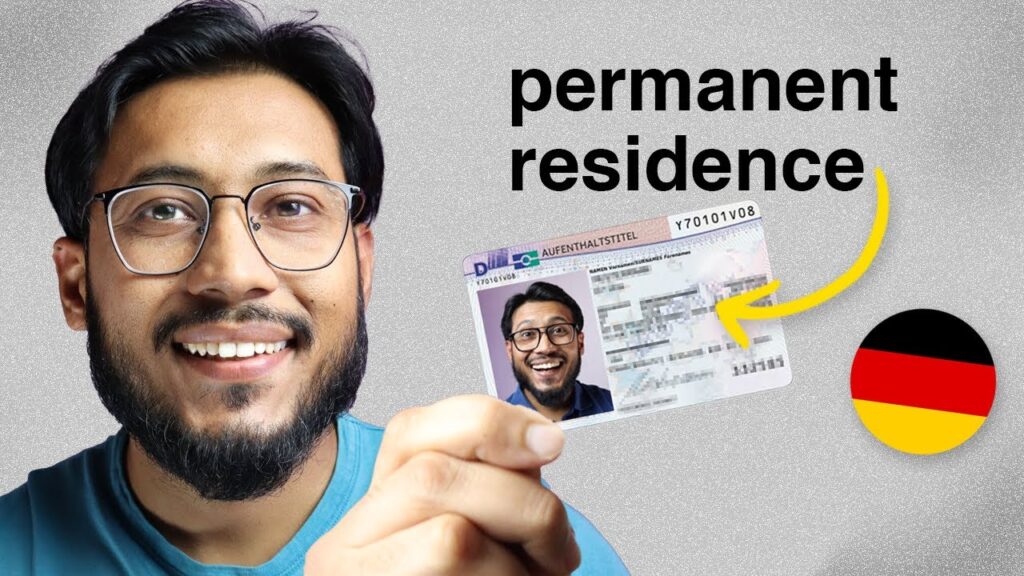

Introduction: Why Permanent Residence in Germany Is a Life-Changing Milestone
For millions of foreigners living and working in Germany, life often feels stable on the surface. You may have a good job, a decent apartment, and a predictable routine. Yet beneath that stability lies one uncomfortable truth: your stay is still temporary.
Every visa expiry date is a reminder that your future depends on paperwork.
Permanent Residence in Germany changes that reality completely.
It is the moment when you:
- Stop renewing residence permits
- Stop worrying about policy changes
- Stop depending on a single employer
- Begin to plan your life with confidence
In practical terms, Permanent Residence transforms Germany from “the country where I work” into “the country where I belong.”
This guide explains, in clear and practical terms, exactly how foreigners can obtain Permanent Residence in Germany, what the requirements are, how long it takes, what documents you need, and what mistakes to avoid.
No legal jargon. No empty promises. Just a reliable, step-by-step roadmap.
What Is Permanent Residence in Germany?
Permanent Residence in Germany is officially known as the Settlement Permit (Niederlassungserlaubnis).
It is the strongest residence status you can hold in Germany before becoming a citizen.
With a settlement permit, you can:
- Live in Germany without any time limit
- Work for any employer or be self-employed
- Change jobs without immigration approval
- Study or start a business freely
- Travel in and out of Germany with fewer restrictions
- Build a long-term life without visa uncertainty
According to the German government’s official immigration portal Make it in Germany, the settlement permit removes almost all restrictions on your stay and provides long-term legal security for foreign residents.
In simple terms:
A temporary residence permit allows you to stay.
A settlement permit allows you to settle.
Permanent Residence vs Temporary Residence: The Practical Difference
Many foreigners underestimate the difference between these two statuses.
Here is a clear comparison:
| Feature | Temporary Residence Permit | Permanent Residence (Settlement Permit) |
|---|---|---|
| Time limit | Yes | No |
| Needs renewal | Yes | No |
| Tied to employer | Often | No |
| Risk of losing status | High | Very low |
| Long-term security | Limited | Very strong |
| Path to citizenship | Indirect | Direct and stable |
Temporary residence is conditional.
Permanent residence is foundational.
Who Should Apply for Permanent Residence?
You should strongly consider applying if:
- You are in Germany on a work visa
- You hold an EU Blue Card
- You are a skilled worker, nurse, or caregiver
- You studied in Germany and now work
- You are self-employed
- You came through family reunification
- You plan to stay in Germany long term
If your future is in Germany, Permanent Residence is not optional. It is strategic.
The Two Official Sources You Should Trust
Immigration advice online is often confusing or outdated. The two most reliable official sources are:
- The German government portal Make it in Germany, which explains residence pathways and legal options.
- The Federal Office for Migration and Refugees (BAMF), which publishes the legal requirements for the settlement permit.
These are the same sources immigration offices rely on.
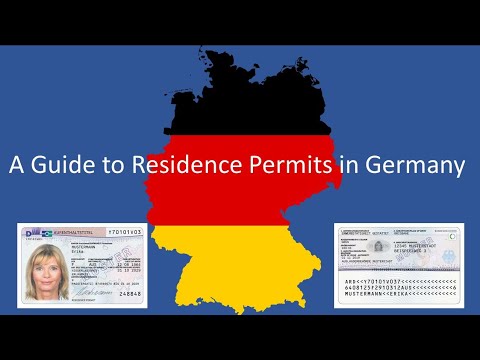 Main Pathways to Permanent Residence in Germany
There is no single route. Your waiting period depends on your residence status.
The most common pathways include:
- EU Blue Card holders
- Skilled workers
- Other employed workers
- Graduates of German universities
- Self-employed persons
- Family members of German residents or citizens
Each group has different timelines and conditions.
How Long Does It Take to Qualify?
Here is a simplified overview:
| Your Status | Typical Time Before You Can Apply |
|---|---|
| EU Blue Card holder | 21–33 months |
| Skilled worker | 4–5 years |
| German university graduate (working) | About 2 years |
| Self-employed person | 3–5 years |
| Family reunification | 3–5 years |
Your German language level can significantly reduce your waiting time.
The Core Requirements You Must Meet
Regardless of your pathway, Germany checks the same fundamentals.
You must prove:
- Legal residence for the required period
- Stable and sufficient income
- Pension insurance contributions
- Valid health insurance
- Basic German language skills
- Proof of integration knowledge
- Adequate housing
- A clean legal record
If even one of these is missing, your application can be delayed or refused.
Explaining the Requirements in Plain Language
1. Stable Income
You must show that:
- You can support yourself and your family
- You do not depend on social welfare
This is proven using:
- Your work contract
- Recent payslips
- Bank statements
2. Pension Contributions
Germany expects you to have contributed to the system.
In most cases, you must show:
- At least 60 months of pension contributions
- EU Blue Card holders often need less
3. Health Insurance
You must have:
- Continuous German health insurance coverage
- Either public or approved private insurance
4. German Language Skills
Usually, you need at least:
- A2 or B1 level German
Better German often means faster approval.
5. Integration Knowledge
You may need:
- An integration course certificate
- Or proof of schooling or study in Germany
6. Housing
You must show:
- A registered address
- Enough living space for your household
The Fastest Route: The EU Blue Card
For many professionals, this is the most efficient path.
If you hold an EU Blue Card:
- You can qualify for Permanent Residence in 33 months
- Or in 21 months if you have B1-level German
This is officially confirmed on the Make it in Germany portal.
Step-by-Step: How to Apply for Permanent Residence
Step 1: Check Your Eligibility
- Count your legal years in Germany
- Check your pension contribution record
- Confirm your language level
Step 2: Prepare Your Documents
Typically required:
- Passport
- Current residence permit
- Registration certificate
- Work contract
- Payslips
- Pension contribution record
- Health insurance proof
- Rent contract
- Language certificate
Step 3: Book an Appointment
- At your local Ausländerbehörde (Foreigners’ Office)
- Waiting times can be several weeks or months
Step 4: Attend Your Appointment
- Submit documents
- Answer basic questions
- Pay the application fee
Step 5: Wait for the Decision
- Processing usually takes several weeks to a few months
How Much Does It Cost?
The typical fee is:
- Between €113 and €150, depending on your case and city
Considering the lifelong benefits, this is a modest investment.
Common Reasons Applications Are Rejected
Many applications fail due to:
- Missing pension contributions
- Unstable or insufficient income
- Incomplete documents
- Weak German skills
- Dependence on social benefits
- Previous legal or immigration issues
Preparation is everything.
What Changes After You Get Permanent Residence?
You gain:
- Freedom to change jobs
- The right to start a business
- Stronger protection against deportation
- Long-term stability for your family
- A clear path to German citizenship
Most importantly, you gain peace of mind.
Permanent Residence vs German Citizenship
| Feature | Permanent Residence | Citizenship |
|---|---|---|
| German passport | No | Yes |
| Voting rights | No | Yes |
| Can be revoked | Rarely | Almost never |
| Legal security | Very high | Absolute |
Permanent Residence is the bridge to citizenship.
Can You Lose Permanent Residence?
Yes, but only in serious situations, such as:
- Staying outside Germany too long
- Serious criminal convictions
- Proven fraud in your application
For law-abiding residents, this is rarely a concern.
Is Permanent Residence in Germany Really Worth It?
Germany is not always easy.
- The language is demanding
- The bureaucracy is slow
- The system is strict
But the rewards are substantial:
- Stability
- Security
- Predictability
- Long-term opportunity
Permanent Residence turns your life in Germany from temporary to permanent in every meaningful sense.
Conclusion: Your Legal Status Determines Your Future
Income helps. Skills help. Connections help.
But nothing determines your long-term security more than your residence status.
Permanent Residence is not just a document. It is:
- Freedom
- Stability
- Belonging
- A future you can plan with confidence
If you qualify, do not postpone it.
Frequently Asked Questions (FAQ)
1. Can I apply without a job?
In most cases, no. You must prove financial independence.
2. Does studying in Germany count?
Yes, but usually only after you start working and contributing.
3. How long can I stay outside Germany after getting PR?
Usually up to six months, or longer with special permission.
4. Is Permanent Residence valid across the EU?
No. It applies only to Germany.
5. Can I apply for German citizenship after Permanent Residence?
Yes. Permanent Residence is the main pathway to citizenship.