

Finding a place to live in Germany as a student can feel exciting. It can also feel overwhelming.
You might imagine cozy rooms, friendly roommates, and peaceful study nights. The reality can be very different. In many cities, hundreds of students compete for the same rooms. Some get lucky in days. Others search for months.
But here is the truth:
If you understand the system and prepare early, you can win.
This guide explains all your main student housing options in Germany. You will learn:
- How student dorms work
- What shared flats really feel like
- When private rentals make sense
- How much each option costs
- How to avoid scams and bad deals
Most importantly, you will learn how to choose what fits your budget and lifestyle.
Let’s start with the big picture.
Why Student Housing in Germany Is So Competitive
Germany is one of the most popular study destinations in the world. It offers:
- Low or no tuition fees
- High-quality universities
- Strong job prospects
- A central location in Europe
This attracts hundreds of thousands of international students every year.
The problem is simple:
- Student numbers grow fast.
- Housing construction grows slowly.
- Demand is much higher than supply.
According to official student housing guidance, finding accommodation in major cities like Munich, Berlin, Hamburg, or Frankfurt can be extremely difficult without early planning. That is why students are advised to start their search months before arrival.
The Three Main Types of Student Accommodation in Germany
Almost all students in Germany live in one of these three:
- Student dormitories (Studentenwohnheim)
- Shared flats (WG – Wohngemeinschaft)
- Private rentals (apartment or studio)
Each has:
- Advantages
- Disadvantages
- Different costs
- Different lifestyles
Let’s break them down carefully.
Quick Comparison Table
Here is a simple overview before we go deep:
| Housing Type | Average Monthly Cost | Privacy Level | Competition | Best For |
|---|---|---|---|---|
| Student Dorm | €250 – €400 | Medium | Very High | Budget-focused students |
| Shared Flat (WG) | €350 – €600 | Medium | High | Social students |
| Private Rental | €500 – €900+ | High | Very High | Students who want privacy |
Prices depend heavily on the city.
Now let’s explore each option in detail.
Option 1: Student Dormitories (Studentenwohnheim)
What Are Student Dorms in Germany?
Student dormitories are student housing buildings managed by:
- Student services organizations (Studentenwerk)
- Universities
- Or private providers
They are designed specifically for students.
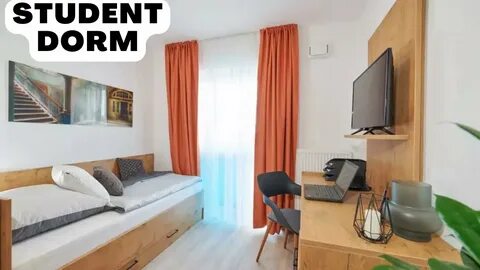
Rooms are usually:
- Single rooms or small studios
- Sometimes with private bathrooms
- Often with shared kitchens
Why Student Dorms Are So Popular
They are popular for simple reasons:
- They are the cheapest option
- They are close to campus
- They include basic furniture
- Utilities are often included in the rent
For many students, dorms are the only affordable option.
The Real Advantages of Dorm Life
- Lower rent than other options
- Predictable monthly costs
- Student-friendly environment
- Easy to meet people
- No need to buy furniture
- Often includes internet and utilities
The Hidden Disadvantages
- Extremely long waiting lists
- Limited number of rooms
- Less privacy
- Rules and regulations
- Sometimes older buildings
In many cities, you must apply 6 to 12 months in advance.
Who Should Choose Student Dorms?
Student dorms are perfect if:
- You are on a tight budget
- You are new to Germany
- You want a simple start
- You do not mind shared spaces
They are not ideal if:
- You need quiet at all times
- You want full privacy
- You want to live with friends or family
 Option 2: Shared Flats (WG – Wohngemeinschaft)
What Is a WG?
A WG is a shared apartment where:
- Each person has a private bedroom
- Everyone shares:
- Kitchen
- Bathroom
- Living space
This is the most common housing type for students in Germany.
Why WGs Are So Popular
WGs offer a balance between:
- Cost
- Social life
- Independence
You are not alone. But you are not in a dorm either.
The Good Side of Living in a WG
- Cheaper than renting alone
- More space than dorms
- Social environment
- You can choose your roommates
- Often in better locations
The Bad Side of WG Life
- Roommate conflicts
- Different lifestyles
- Cleaning issues
- Shared fridge problems
- Less privacy
Living in a WG is not just about money. It is about people skills.
How WG Applications Really Work
In many cities, WGs:
- Receive 50 to 200 messages per room
- Choose based on:
- Personality
- Lifestyle
- First impression
You are not just renting a room. You are applying to join a small community.
Who Should Choose a WG?
A WG is perfect if:
- You are social
- You want to practice German or English
- You want to save money
- You like shared living
It is not ideal if:
- You need full control of your space
- You hate noise or mess
- You prefer living alone
Option 3: Private Rentals (Apartments or Studios)
What Is a Private Rental?
This means:
- You rent your own apartment or studio
- You live alone or with your partner
- You manage everything yourself
This is the most expensive option.
Why Some Students Still Choose It
- Full privacy
- No roommates
- Full control of your space
- Better for couples or families
- Better for long-term stays
The Real Costs of Private Renting
Private rentals usually mean:
- Higher rent
- Extra costs for:
- Electricity
- Internet
- TV tax
- Sometimes heating
In big cities, prices can easily go above €700 to €1,000 per month.
The Biggest Challenges
- Very high competition
- Strict requirements
- Deposits up to three months rent
- SCHUFA or income proof often required
Private rentals are the hardest option for new international students.
Who Should Choose a Private Apartment?
This option is best if:
- You have a strong budget
- You stay long-term
- You work while studying
- You want full independence
How Much Does Student Accommodation Cost in Germany?
Costs depend mainly on:
- The city
- The district
- The housing type
Here is a realistic range:
- Small cities: €250 – €450
- Medium cities: €350 – €650
- Big cities: €450 – €900+
Munich, Frankfurt, and Hamburg are the most expensive.
Why Location Matters More Than You Think
Living:
- 20 minutes outside the city center
can save you: - €100 to €300 per month
Germany has excellent public transport.
Sometimes, distance is cheaper than stress.
How to Apply for Student Dorms Properly
Most dorms are managed by Studentenwerk.
You usually need:
- University admission letter
- Application form
- Passport
- Sometimes proof of funds
You can find official guidance and student housing information on the DAAD website, which is Germany’s main academic exchange service.
Apply as early as possible. Even before you get your visa.
How to Find WGs and Private Rooms
Popular methods:
- University notice boards
- Student Facebook groups
- Housing platforms
- Word of mouth
Always:
- Be polite
- Be short
- Be honest
- Add a short introduction about yourself
The Most Common Student Housing Scams
Be careful if:
- They ask for money before viewing
- The price is too good to be true
- They refuse video calls
- They send fake contracts
- They claim to be “abroad” and unavailable
Never send:
- Deposit
- Passport copy
- Or personal data
without seeing the place or verifying the owner.
What Is Included in Rent in Germany?
German ads often use these words:
- Kaltmiete = Cold rent (only the room)
- Warmmiete = Warm rent (includes utilities)
Always ask:
- Is electricity included?
- Is internet included?
- Is heating included?
How to Choose the Right Option for You
Ask yourself:
- What is my budget?
- How long will I stay?
- Do I want privacy or people?
- Can I handle shared spaces?
There is no perfect choice. There is only the right choice for your situation.
A Smart Strategy for New Students
Many students do this:
- Start in:
- Temporary housing or dorm
- After arrival:
- Search for a better WG or apartment
- Move after:
- 3 to 6 months
This reduces stress and bad decisions.
Final Thoughts: Your Home Shapes Your Student Life
Your accommodation affects:
- Your finances
- Your mental health
- Your social life
- Your academic performance
Choose wisely. But do not panic.
Millions of students have done this before you.
You will too.
Frequently Asked Questions (FAQ)
1. What is the cheapest student accommodation in Germany?
Student dormitories are usually the cheapest option, often costing between €250 and €400 per month.
2. Is it hard to find student housing in Germany?
Yes, especially in big cities. You should start searching months before arrival.
3. Can international students rent apartments in Germany?
Yes. But private rentals are harder without income proof or a German credit history.
4. Are utilities included in German student rent?
Sometimes. Always check if the rent is “Warmmiete” or “Kaltmiete”.
5. Should I book housing before getting my visa?
Yes. Many embassies require proof of accommodation or at least a plan.