
Introduction: Your First Europe Trip Shouldn’t Feel Like an Exam
Your first trip to Europe should feel exciting.
It should feel simple.
It should feel possible.
For many beginners, Schengen Europe feels like the opposite. Long forms. Embassy appointments. Bank statements. Rejection anxiety. Waiting without certainty.
That stress kills the joy before the journey begins.
Visa-free Europe offers a gentler entry point. It removes fea, restores confidence and lets beginners focus on travel, not paperwork.
This article explains why visa-free Europe is often a better starting point than Schengen. We will compare entry rules, costs, crowds, safety, and emotional ease. We will also be honest about downsides.
If this is your first Europe trip, this guide is for you.
What Beginners Need to Understand About Schengen
The Schengen Area allows border-free travel between many European countries. That sounds great, but entry is the challenge.
For beginners, Schengen means:
- Embassy appointments
- Detailed documentation
- Strict financial proof
- Fixed travel dates
- High rejection risk
Even after approval, the 90 days within 180 days rule limits flexibility.
You can review official rules on the Schengen Borders and Visa Policy page. The system is efficient, but not beginner-friendly.
Schengen is designed for experienced travelers. Beginners often struggle.
What “Visa-Free Europe” Actually Means
Visa-free Europe usually refers to European countries outside Schengen that allow:
- Visa-free entry
- Visa on arrival
- Simple e-visa
No embassy visits, interviews and weeks of waiting.
For beginners, this is powerful. You plan faster, worry less and travel sooner.
Visa-free does not mean careless. Rules still exist. But the barrier is lower.

Why Beginners Feel Overwhelmed by Schengen
First-time travelers face emotional pressure.
Common Beginner Fears
- “What if my visa is rejected?”
- “What if I submit the wrong document?”
- “What if I lose my money?”
These fears are valid.
Schengen applications are unforgiving. Small mistakes can cause rejection. Rejection affects future applications.
Visa-free Europe removes that fear loop.
Confidence Matters More Than Destinations
Confidence shapes travel quality.
Beginners who feel relaxed:
- Ask questions freely
- Explore more
- Interact with locals
- Make better decisions
Visa-free entry gives beginners psychological comfort. That comfort translates into better experiences.
Travel should build confidence, not destroy it.
Albania: The Perfect First Europe Country
Albania is one of the best beginner destinations in Europe.
Why Albania Beats Schengen for Beginners
- Visa-free entry
- Affordable accommodation
- Mediterranean scenery
- Friendly locals
- Simple border process
Albania feels European without pressure. You see beaches, old towns, and cafés. You do not feel watched or rushed.
Beginner Drawbacks
- Limited direct flights
- Less luxury infrastructure
- Cash usage outside cities
Still, Albania offers a soft landing into Europe.
Georgia: Freedom Without Deadlines
Georgia allows many travelers to stay up to one year visa-free.
For beginners, this is revolutionary.
Why Georgia Is Beginner Gold
- No visa for 360 days
- Affordable living
- Reliable internet
- Calm pace
Beginner Challenges
- Cold winters
- Language barriers outside cities
- Cultural differences
Georgia rewards patience and curiosity.
Serbia: Urban Europe Without Embassy Stress
Serbia offers visa-free entry to many travelers.
Belgrade feels alive. Cafés, rivers, nightlife, history.
Why Beginners Like Serbia
- Easy entry
- Affordable prices
- Vibrant social scene
Things Beginners Should Know
- Border officers may ask questions
- Winters are harsh
- Limited coastal options
Serbia is energetic, not intimidating.
Bosnia: Slow Travel for First-Timers
Bosnia is calm and reflective.
Why Beginners Feel Safe Here
- Low crowds
- Affordable living
- Respectful culture
- Easy visa rules
Sarajevo teaches history gently.
Limitations
- Slower transport
- Modest nightlife
- Limited English in villages
Bosnia is ideal for slow beginners.
Montenegro: Scenic Simplicity
Montenegro offers postcard views without Schengen pressure.
Why Beginners Enjoy Montenegro
- Stunning coastlines
- Compact travel distances
- Safe environment
Beginner Warnings
- Prices higher than neighbors
- Seasonal crowds
- Limited flights
It is scenic but slightly pricier.
North Macedonia: Quiet Confidence Builder
North Macedonia remains underrated.
Why It Works for Beginners
- Smooth entry
- Low costs
- Calm cities
- Natural beauty
Lake Ohrid feels peaceful.
Where It Falls Short
- Limited attractions
- Sparse nightlife
- Fewer flight routes
It is perfect for nervous first-timers.
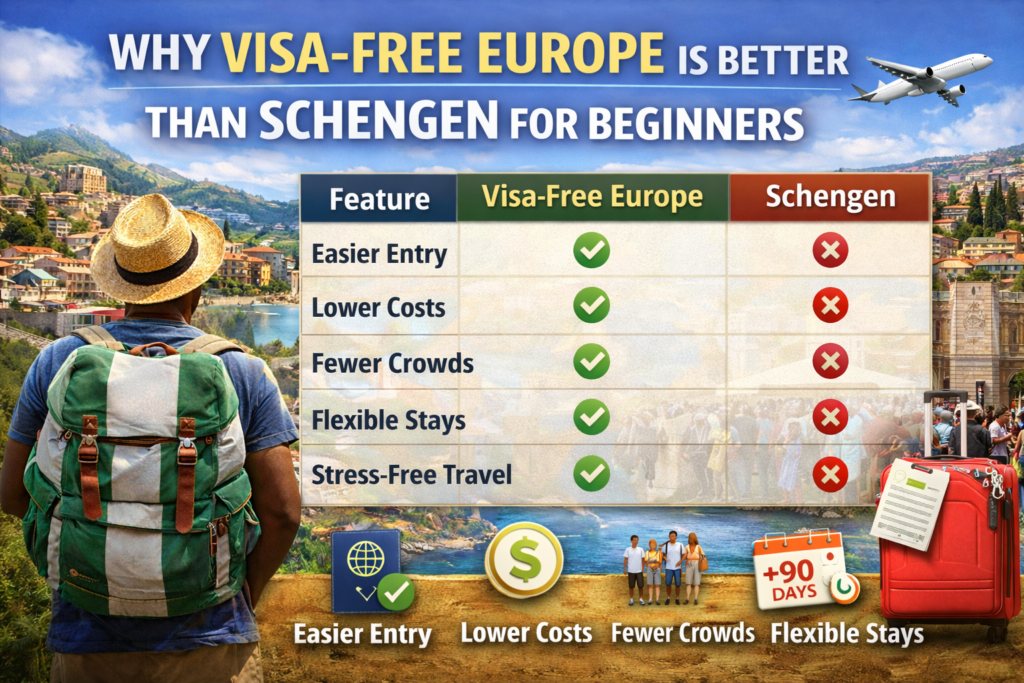
Schengen vs Visa-Free Europe: A Beginner Comparison
| Feature | Schengen Europe | Visa-Free Europe |
|---|---|---|
| Embassy visits | Required | Not required |
| Visa rejection risk | High | None or low |
| Planning stress | High | Low |
| Costs | High | Lower |
| Crowds | Heavy | Lighter |
| Flexibility | Limited | Flexible |
| Beginner-friendly | Low | High |
This difference explains the shift.
Cost Reality: Why Beginners Spend Less Outside Schengen
Money stress ruins trips.
Visa-free Europe costs less across key areas.
According to Numbeo cost of living data:
- Rent is significantly cheaper
- Food costs drop sharply
- Transport is affordable
- Entertainment is accessible
Beginners can travel longer without financial panic.
Crowds: Another Beginner Advantage
Schengen cities are crowded year-round.
Beginners struggle with:
- Long queues
- Overbooked attractions
- Packed transport
Visa-free destinations feel open. You walk freely. You explore calmly.
Crowd-free travel builds confidence.
Safety: Beginners Often Feel Safer Than Expected
Most visa-free European countries are safe.
Violent crime rates are low. Petty theft exists, as everywhere.
Beginners report:
- Helpful locals
- Calm streets
- Visible policing
Safety improves with awareness.
Language: Less of a Problem Than Beginners Expect
English is widely spoken in cities.
Outside cities, basics help.
Tools beginners rely on:
- Translation apps
- Simple greetings
- Body language
Language rarely stops travel.
What Beginners Still Need to Prepare
Visa-free does not mean careless.
Beginners should carry:
- Valid passport
- Return ticket
- Accommodation proof
- Some funds
Confidence at borders matters.
Beginner Mistakes to Avoid
Avoid these errors:
- One-way tickets
- No hotel bookings
- Overstaying limits
- Assuming Schengen access
Knowledge prevents problems.
Who Should Start With Visa-Free Europe
Visa-free Europe is ideal for:
- First-time travelers
- Budget explorers
- Students
- Digital nomads
- Families
Luxury-focused travelers may prefer Schengen.
How Visa-Free Travel Builds Long-Term Confidence
First trips shape future behavior.
Beginners who succeed:
- Travel more often
- Explore deeper regions
- Apply for Schengen later with confidence
Visa-free Europe becomes a training ground.
Why Schengen Makes More Sense Later
Schengen is not bad. It is just advanced.
Once you:
- Understand borders
- Manage documents
- Build travel history
Schengen becomes easier.
Visa-free Europe prepares you for it.
Conclusion: Start Easy, Travel Smarter
Your first Europe trip sets the tone.
Stress creates fear.
Ease builds confidence.
Visa-free Europe removes barriers that beginners struggle with. It offers beauty without bureaucracy. It offers learning without punishment.
Schengen can wait.
Visa-free Europe is not a shortcut.
It is the smarter first step.